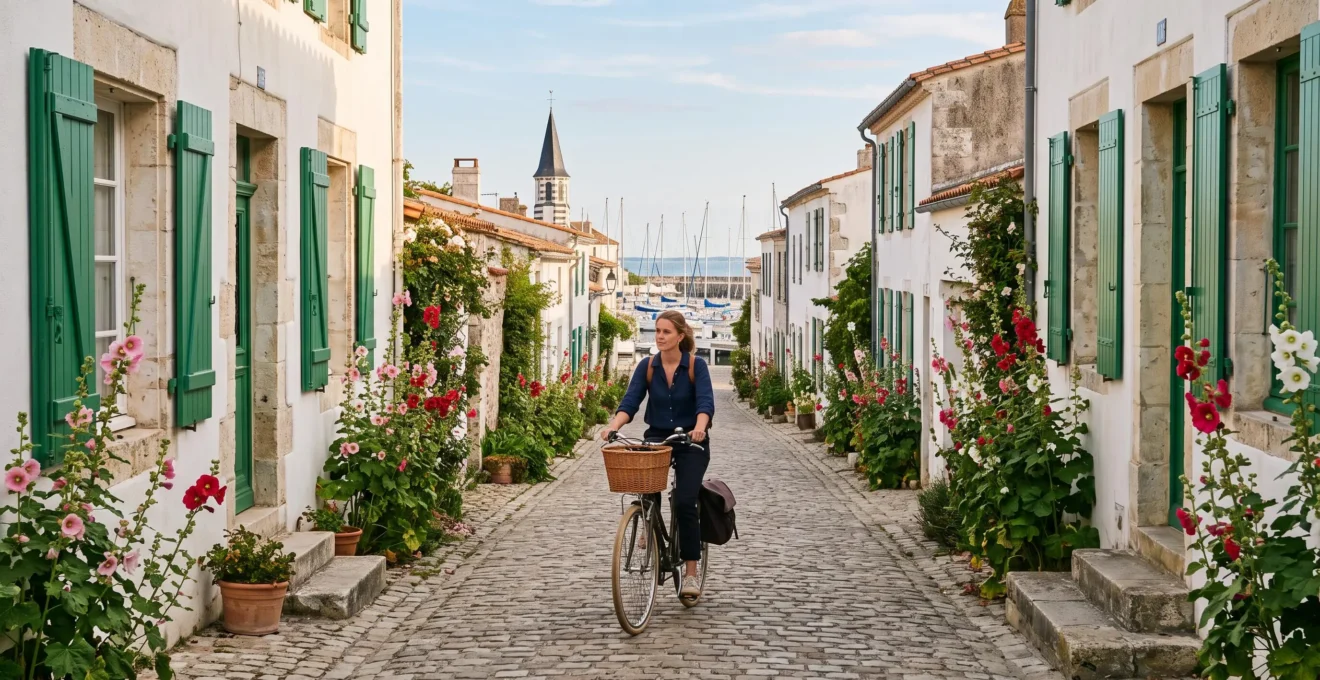
If you are looking for the most beautiful villages on Île de Ré but only have limited time, start with this priority list: Saint-Martin-de-Ré (historic port and UNESCO-listed fortifications), Ars-en-Ré (salt marsh landscape and iconic church spire), La Flotte (one of the island’s officially recognised “Most Beautiful Villages of France”), then choose between Les Portes-en-Ré and Loix for a quieter, more nature-led stop.
Réponse directe : For a first visit, prioritise Saint-Martin-de-Ré, Ars-en-Ré and La Flotte. Add Les Portes-en-Ré if you want beaches and a wilder feel, or Loix if you prefer a calm village atmosphere close to salt marshes.
The key idea is simple: each village has a distinct identity. Once you know what you are looking for (heritage, ports, marshes, markets, calm lanes), it becomes much easier to build an itinerary that fits a day trip, a weekend, or a longer stay.
How to pick the right villages quickly
- For “must-see” heritage: Saint-Martin-de-Ré.
- For salt marsh scenery: Ars-en-Ré (and the quieter Loix nearby).
- For a picture-perfect village centre: La Flotte.
- For nature and a slower pace: Les Portes-en-Ré.
- If time is tight: focus on 2–3 villages rather than trying to “collect” all of them.
What Makes the Villages of Île de Ré So Special?
Across Île de Ré, you will notice a strong visual unity: whitewashed houses, colourful shutters, narrow lanes, and flower-filled walls (hollyhocks are especially visible in season). That shared style makes village-hopping satisfying: each stop feels coherent, yet never identical.
The island identity is also tied to its landscapes: low-lying terrain, salt marshes, vineyards, and working or leisure harbours. This is why two villages can feel completely different even on the same day: you might go from a lively port with terraces to a quiet inland loop bordered by marsh channels.
For visitors who want reliable, up-to-date selections, it helps to lean on official sources and labels. The official tourism body notes that the island has ten villages and confirms that La Flotte and Ars-en-Ré are both designated “Most Beautiful Villages of France”, among the island’s ten villages, via the office de tourisme officiel de l’île.
In the next section, the villages are presented as a practical shortlist, with a clear “why this one” so you can prioritise confidently—and accept skipping a village without feeling you are missing the essentials.
The Must-See Villages on the Island
Think of this selection as a decision tool, not an exhaustive catalogue. For each village below, the first sentence gives you the distinctive reason to go—so you can match it to your time and what you want to experience.
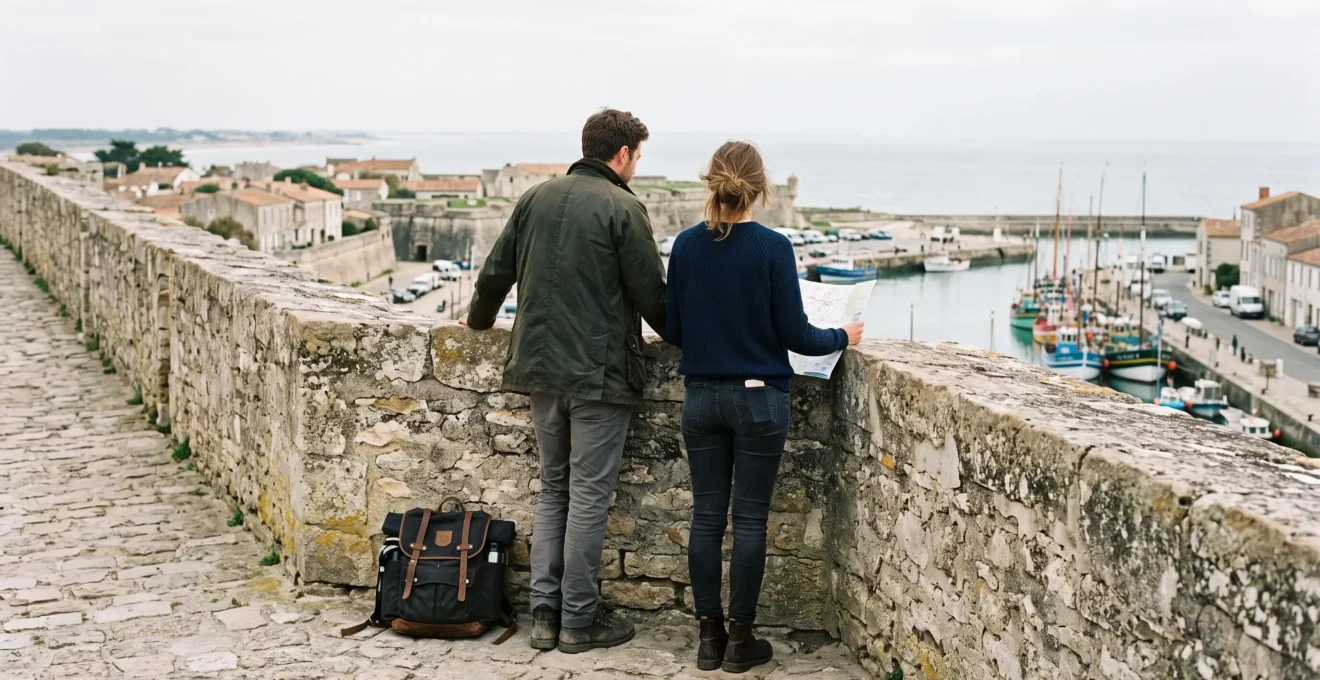
Saint-Martin-de-Ré: for UNESCO-listed fortifications and a historic harbour
Choose Saint-Martin-de-Ré if you want the island’s most striking built heritage in one place: a fortified setting around the port and town. The official Destination Île de Ré website states that Saint-Martin-de-Ré has UNESCO-listed fortifications, which makes it the most straightforward “first stop” for history and atmosphere in a single walkable area.
What to do on a limited schedule: plan a port-side stroll, then spend your remaining time on the ramparts for viewpoints and a better sense of the town’s layout. If you are only visiting one village on Île de Ré, this is often the safest choice.
Ars-en-Ré: for salt marsh landscapes and an iconic church spire
Choose Ars-en-Ré for the meeting point between village life and marshland. The Association marais salants d’Ars-en-Ré depuis le XIe siècle notes that the salt marshes were established in the 11th century and are still worked today, and it highlights the village’s black-and-white church spire as a long-standing landmark.
Why it matters for your itinerary: Ars-en-Ré gives you a “signature” Île de Ré view quickly—white houses, a compact centre, then open marshes just outside. If you are unsure whether to add a quieter stop, Ars is a strong candidate because the scenery changes fast once you leave the central streets.
La Flotte: for an officially recognised “Most Beautiful Village of France” feel
Choose La Flotte if you want a village that is widely recognised for its overall harmony and charm. Destination Île de Ré confirms La Flotte is designated “Most Beautiful Villages of France”, which makes it a reliable pick when you want a photogenic village centre without needing to research deeply.
Practical way to visit: focus on a compact walk in the centre, then decide whether to linger (market and harbour atmosphere) or keep moving—La Flotte works well as a shorter stop inserted between bigger visits.
Les Portes-en-Ré: for a quieter, nature-led side of the island
Choose Les Portes-en-Ré when your priority is calm lanes, a more residential feel, and easy access to the island’s open, natural spaces. Compared with the more port-focused villages, this is often the better match for travellers who want to slow down and spend more time outdoors than in the centre.
How to prioritise it: add Les Portes-en-Ré if you have at least half a day to combine village time with nearby nature. If you only have a tight day trip, you may prefer to concentrate on Saint-Martin-de-Ré plus either Ars-en-Ré or La Flotte.
Loix: for marsh-side walks and a “small village” rhythm
Choose Loix if your ideal stop is a low-key village where the surrounding landscape is part of the visit. It is a good option for travellers who have already planned one “headline” village and want a contrast: fewer crowds, more breathing space, and short walks that quickly feel rural.
Good pairing: Loix and Ars-en-Ré complement each other well if you want to understand the salt-marsh identity of Île de Ré without spending your whole day in the busiest areas.
How to Organize Your Village-Hopping Itinerary
A smooth plan on Île de Ré comes down to two decisions: when you go (to manage crowd levels and comfort) and how you move (bike-focused or car-focused). The island is well known for being bike-friendly in practice, and cycling is often the easiest way to experience the transitions between villages, marshes and coastline.
Seasonality matters mainly for ambience: in busy periods, the same village can feel very different at midday versus early morning or late afternoon. If you want a quieter visit, start with your “must-see” village early, then keep the more flexible, nature-led stop for later in the day.
- Pick 2–3 villages maximum
Choose one “anchor” village (often Saint-Martin-de-Ré) and add one contrast (Ars-en-Ré for marshes, or La Flotte for village-centre charm).
- Group stops geographically
Stay on one side of the island for the morning and the other for the afternoon to reduce back-and-forth travel.
- Decide your transport first
If you want to cycle between stops, keep the number of villages lower and build in time for scenic detours.
- Leave time for unplanned moments
Markets, harbour views and short walks often become the highlights—avoid a schedule that is “village, photo, leave”.
If you are arriving by car via the bridge, note that the crossing is tolled and prices vary by season. According to the Département de la Charente-Maritime, since 1 January 2025 the return toll for eligible vehicle classes is €4 in low season, €8 in mid season and €16 in high season, as shown in the tarifs officiels du péage du pont.
What to Look for in Each Village
If you want each stop to feel different (instead of “another pretty street”), use the same observation checklist everywhere—and look for what changes. On Île de Ré, differences often show up in the relationship to the water (harbour, marsh channels, open coast) and in the village’s rhythm (busy port versus quieter lanes).
Start with architecture details: white façades, shutter colours, doorways, and how narrow lanes open onto small squares. Then shift to “living” elements: market stalls, local crafts, and how people use public space around the port or church.
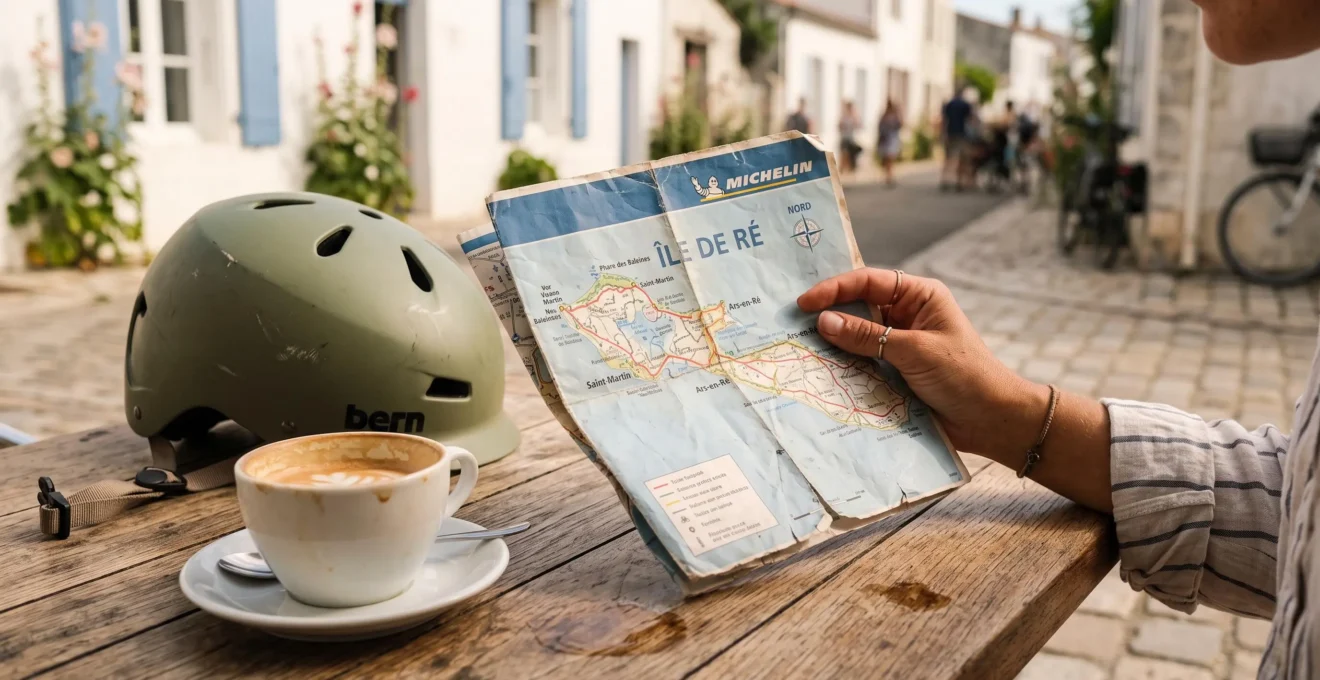
In Ars-en-Ré, for example, the landscape cue is immediate: the village quickly blends into the salt marsh environment, and the church spire is a visual anchor as you move around. In Saint-Martin-de-Ré, the experience is structured by fortifications and viewpoints that change how you read the town.
If you are worried about “missing the must-sees” by skipping a village, use this rule: you are unlikely to regret skipping a similar stop. You will regret skipping the one village that matches what you personally came for—heritage, marsh scenery, or a calm, local feel.
Planning Your Trip to Île de Ré
To finalise your plan, lock in your priorities first, then refine logistics. A practical baseline for first-timers is: Saint-Martin-de-Ré + Ars-en-Ré + La Flotte. From there, add one quieter stop (Les Portes-en-Ré or Loix) only if you have the time to enjoy it without rushing.
- You have only one day :
Pick two villages: Saint-Martin-de-Ré plus either Ars-en-Ré (marshes) or La Flotte (village charm).
- You have a weekend :
Visit Saint-Martin-de-Ré, Ars-en-Ré and La Flotte, then add Les Portes-en-Ré or Loix for contrast.
- You prefer calm over landmarks :
Keep one “headline” village, then build the rest around quieter stops and longer bike rides.
Which villages should I visit on Île de Ré if I only have one day?
A realistic one-day plan is two villages: Saint-Martin-de-Ré for heritage and harbour atmosphere, then either Ars-en-Ré for salt marsh scenery or La Flotte for a highly “village-centre” experience. This keeps travel simple and leaves time to walk rather than rush.
What makes each village different from the others?
On Île de Ré, differences usually come from what surrounds the village (harbour, marshes, open coast) and the pace (busy, visitor-oriented centres versus quieter residential lanes). Use one consistent checklist—built heritage, water landscape, market life—to spot what changes from village to village.
Am I going to miss the must-sees if I skip a village?
Not if you pick villages with distinct “roles”. Most regret comes from trying to do too many similar stops quickly. Prioritise one heritage-focused village (often Saint-Martin-de-Ré), one marsh-focused village (Ars-en-Ré), and one village chosen for overall charm (La Flotte), then treat the rest as optional depending on your time.
What is the best time to visit Île de Ré villages?
The most comfortable time is when you can walk and cycle easily and avoid the busiest hours. In peak periods, visiting early morning or late afternoon often feels calmer than midday. For planning that depends on bridge access costs, toll prices vary by season as published by the Département de la Charente-Maritime (see their official tariff grid).
If you keep one principle in mind, make it this one: the “best” village is the one that fits your available hours. With a clear shortlist and a simple rhythm—one anchor village, one contrast village, and time to wander—you can experience the most beautiful villages on Île de Ré without feeling like you rushed past the island itself.